Mero Swasthya
A personal health record app, designed and built solo, that turns a photo of a handwritten prescription into a structured record: doctor, diagnosis, medicines, reminders, and a plain-language explanation of what it all means.
Most people's medical history lives in a shoebox of paper prescriptions, half of them in handwriting only the pharmacist can read. Mero Swasthya ("my health" in Nepali) started from that specific, unglamorous problem: there's no easy way for someone to keep a running, searchable record of their own hospital visits, diagnoses, and medications, especially when every visit produces another slip of paper that's easy to lose and hard to reread six months later.
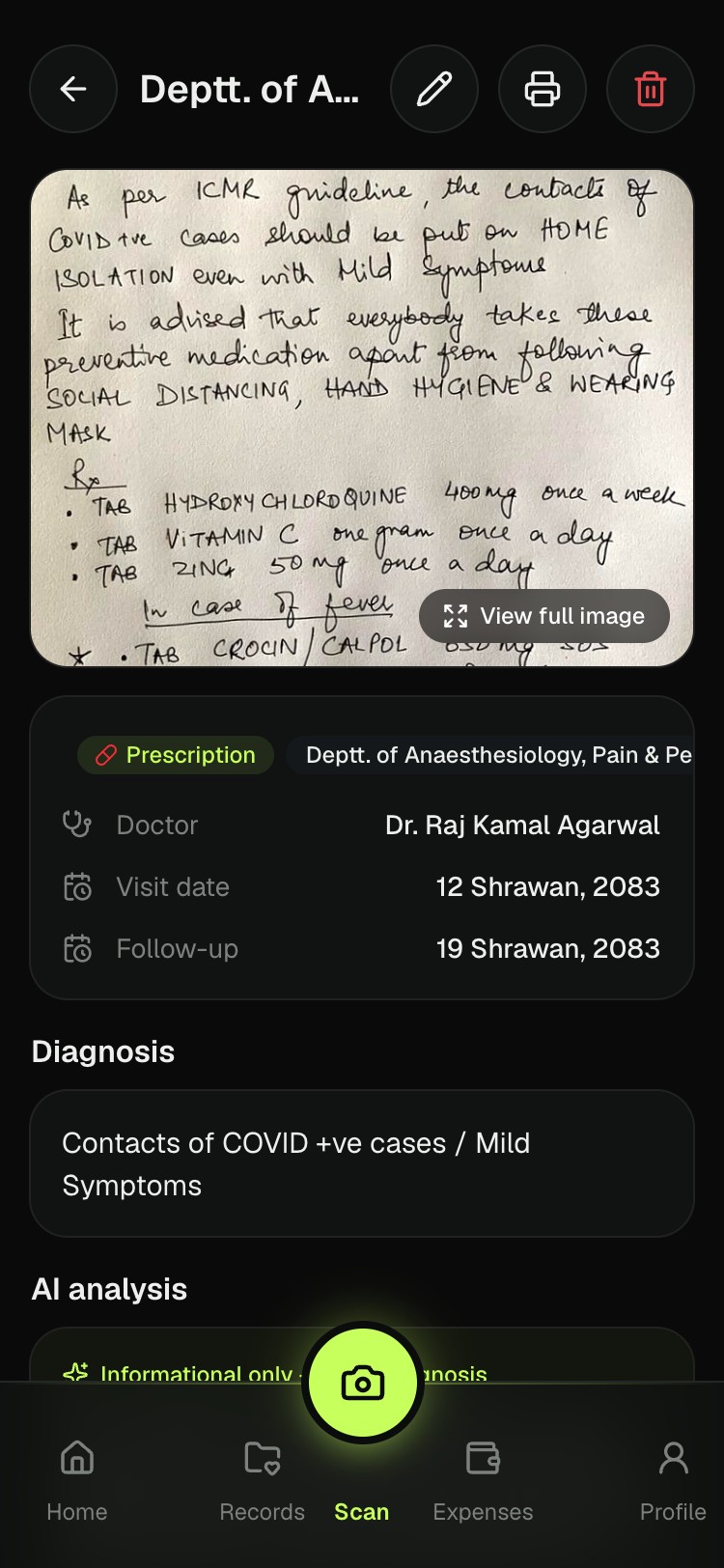
I designed and built the whole thing myself: the product decisions, the interface, and the implementation were all mine, with Claude as my AI coding partner helping me build it. The core loop is: scan a prescription (camera-first, with a gallery-upload fallback when camera access isn't available), and the app extracts the doctor, visit date, follow-up date, and diagnosis into a structured record automatically, sitting right alongside the original scanned image so nothing gets lost in translation.
The feature I'm most glad I built is the AI analysis panel on every record. Medical notes are written for doctors and pharmacists, not patients, so each record gets a plain-language explanation of what the medications are for and what the note actually means, clearly labeled as informational only, with a direct nudge to confirm anything important with your own doctor. It's the difference between a filed piece of paper and something a patient can actually understand.
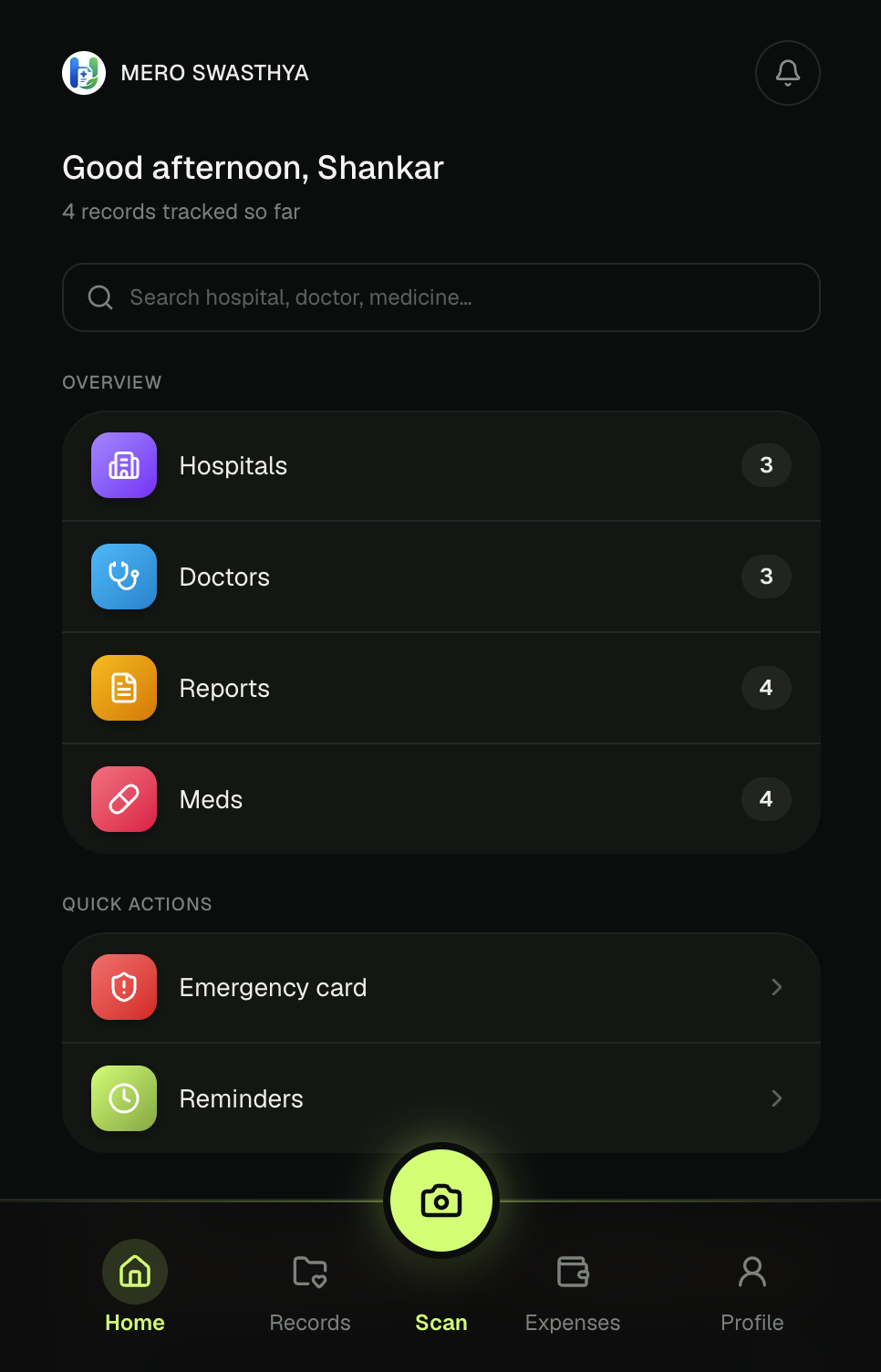
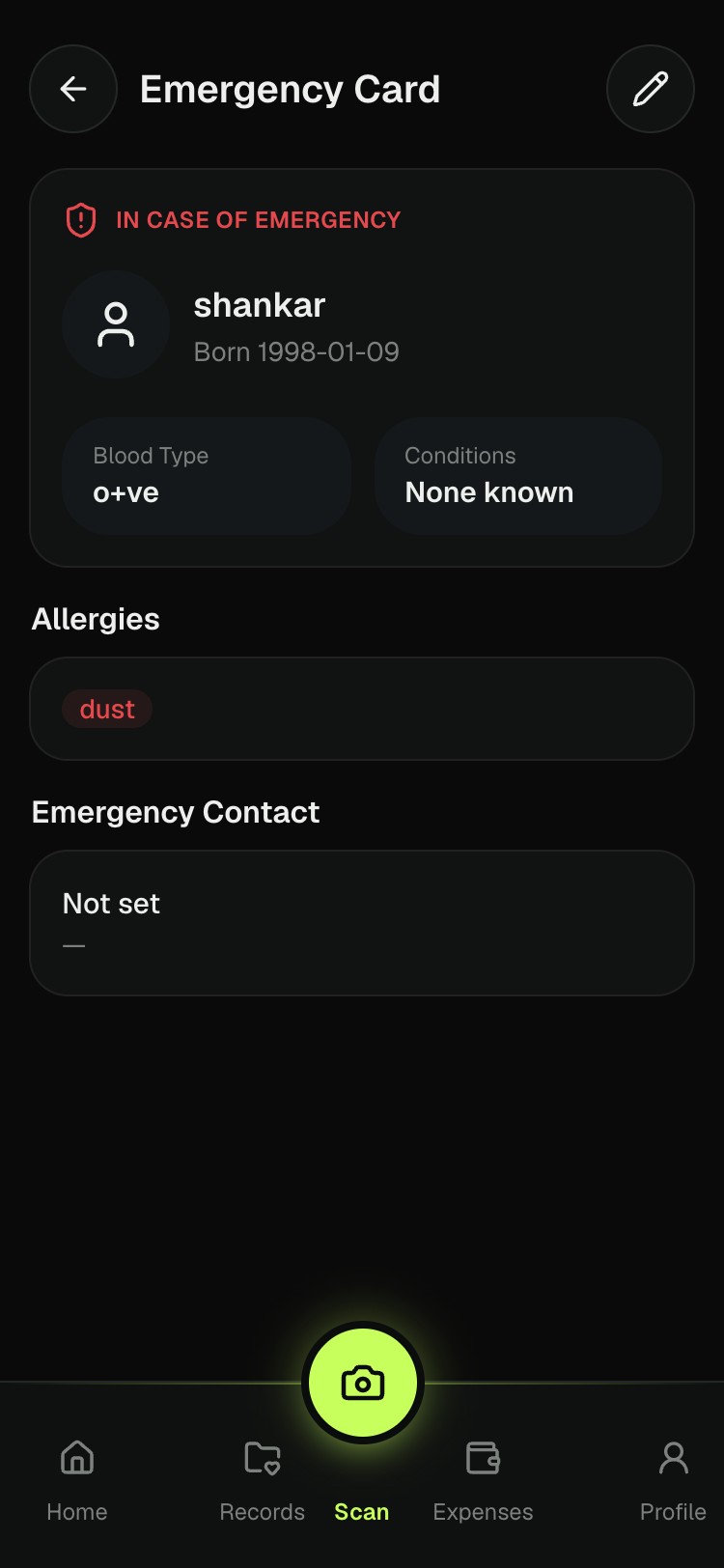
From there, the app tracks the practical side of managing your own care: a medicine list with individual, per-item reminders; an Emergency Card with blood type, known conditions, allergies, and an emergency contact, designed to be pulled up fast in a crisis, not buried three menus deep; and an expenses view that tracks lifetime and monthly medical spend, insurance savings, and a breakdown by hospital and category, so patterns in cost are visible instead of scattered across old receipts.
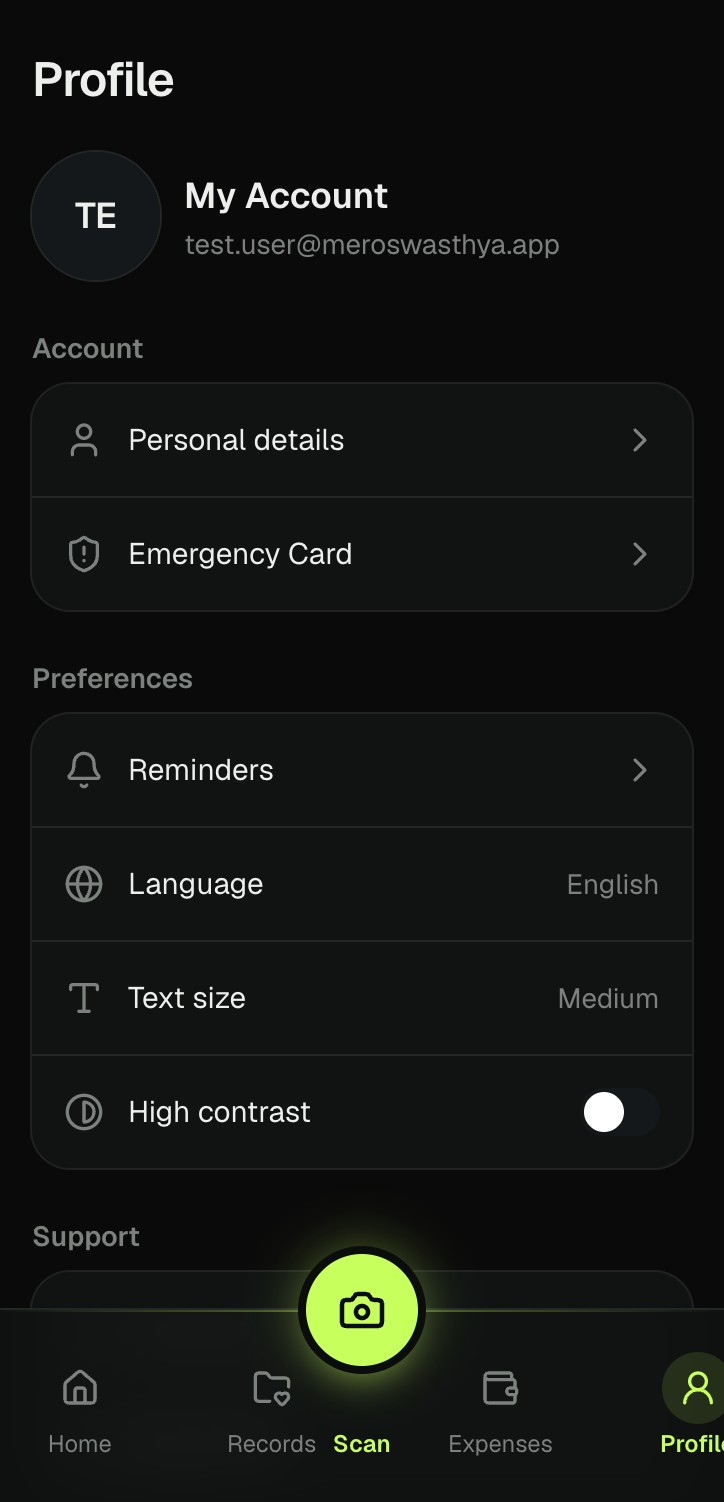
I also built in the things that make a health app usable by more than one kind of user: adjustable text size and a high-contrast mode in settings, since a lot of the people who need this most (older patients, people managing chronic conditions) are the least served by small, low-contrast type.
Before & after
Prescriptions existed only as loose paper slips, easy to lose, tear, or leave behind at the pharmacy.
Every prescription is scanned once and kept as a permanent digital copy, alongside the record it creates.
Handwritten medical notes were legible to a pharmacist, not to the patient who actually has to follow them.
An AI analysis panel explains what the medicines are for and what the note means, in plain language.
There was no running history: each hospital visit was a disconnected event, hard to piece together months later.
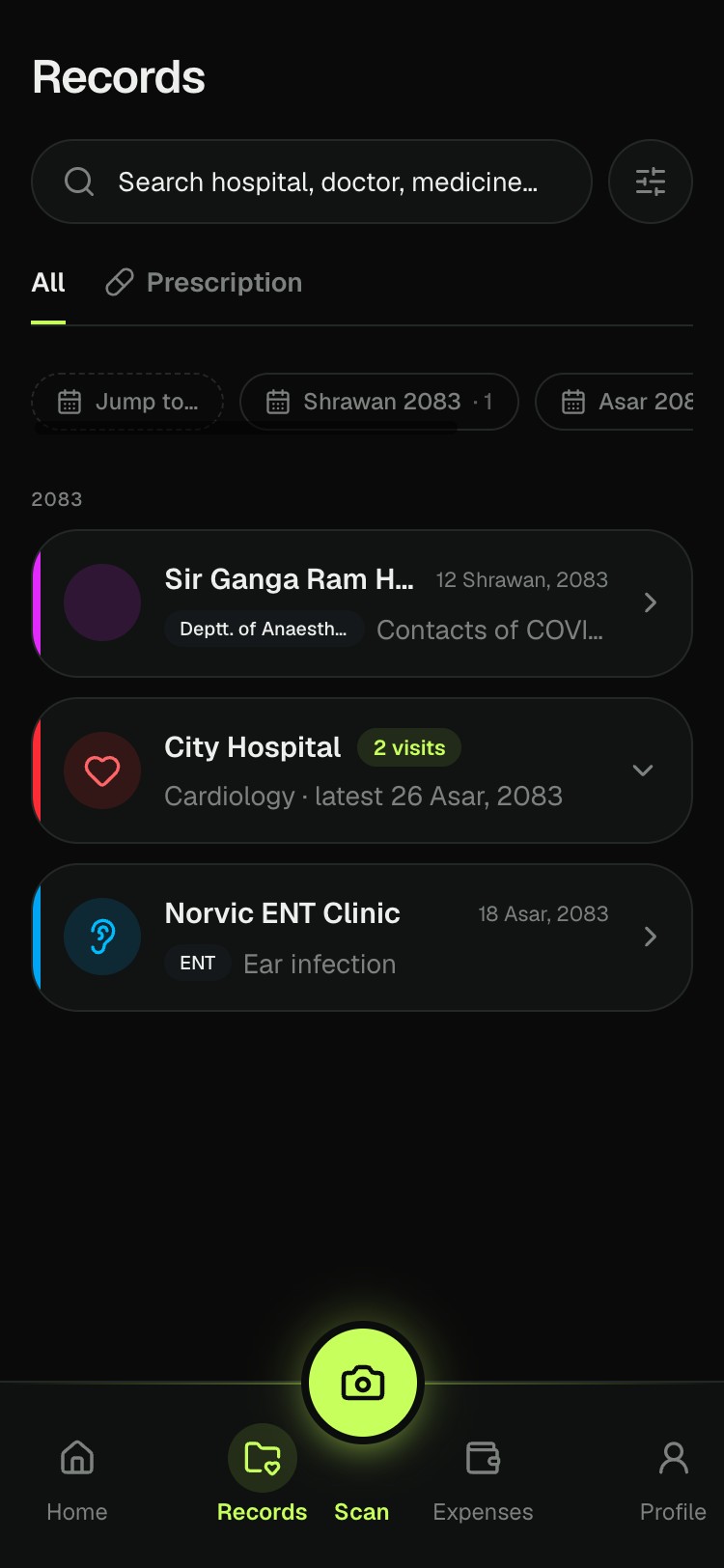
Every visit lands in a single searchable timeline, grouped by date and filterable by type.
Follow-up appointments were easy to forget with no system tracking them.
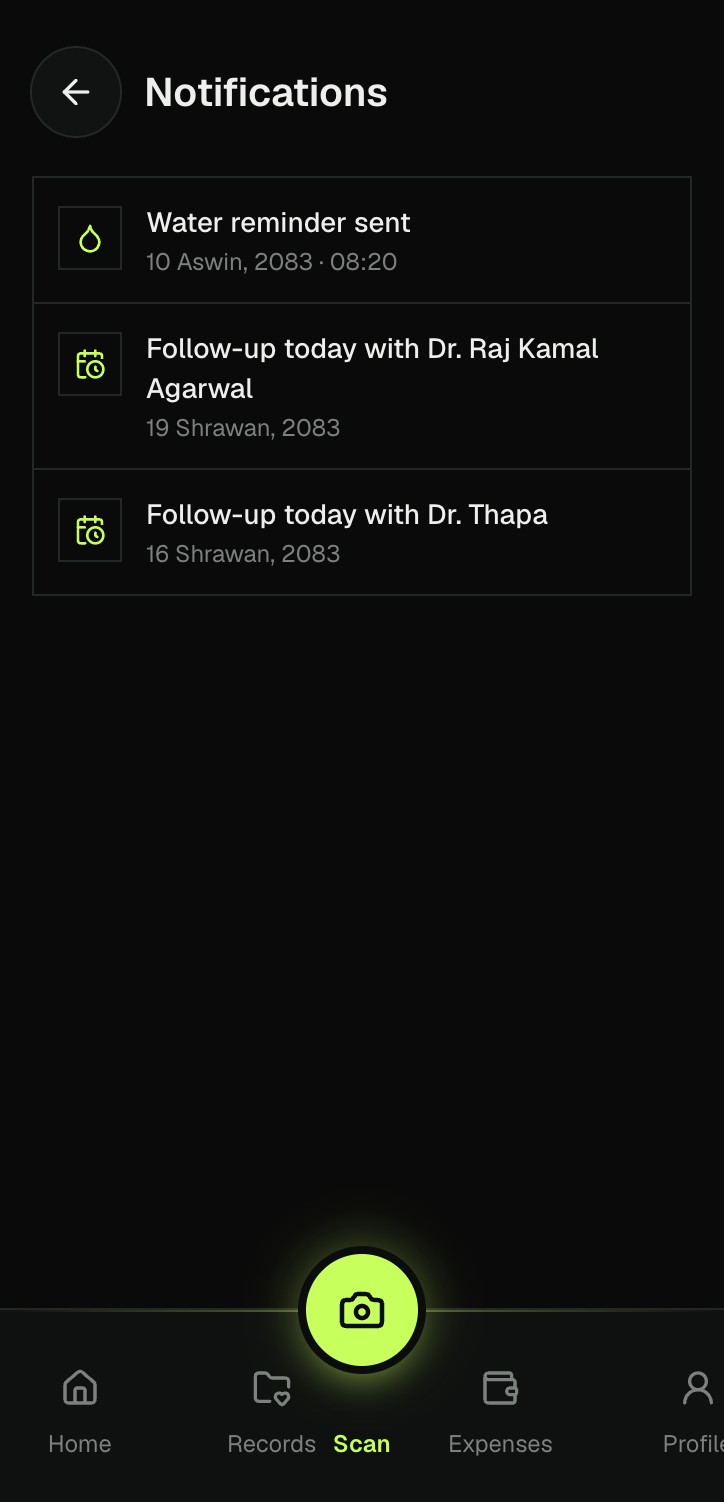
Follow-up dates are captured automatically and surfaced as reminders and notifications.
Medication schedules relied on memory, with no prompts for multiple daily doses.
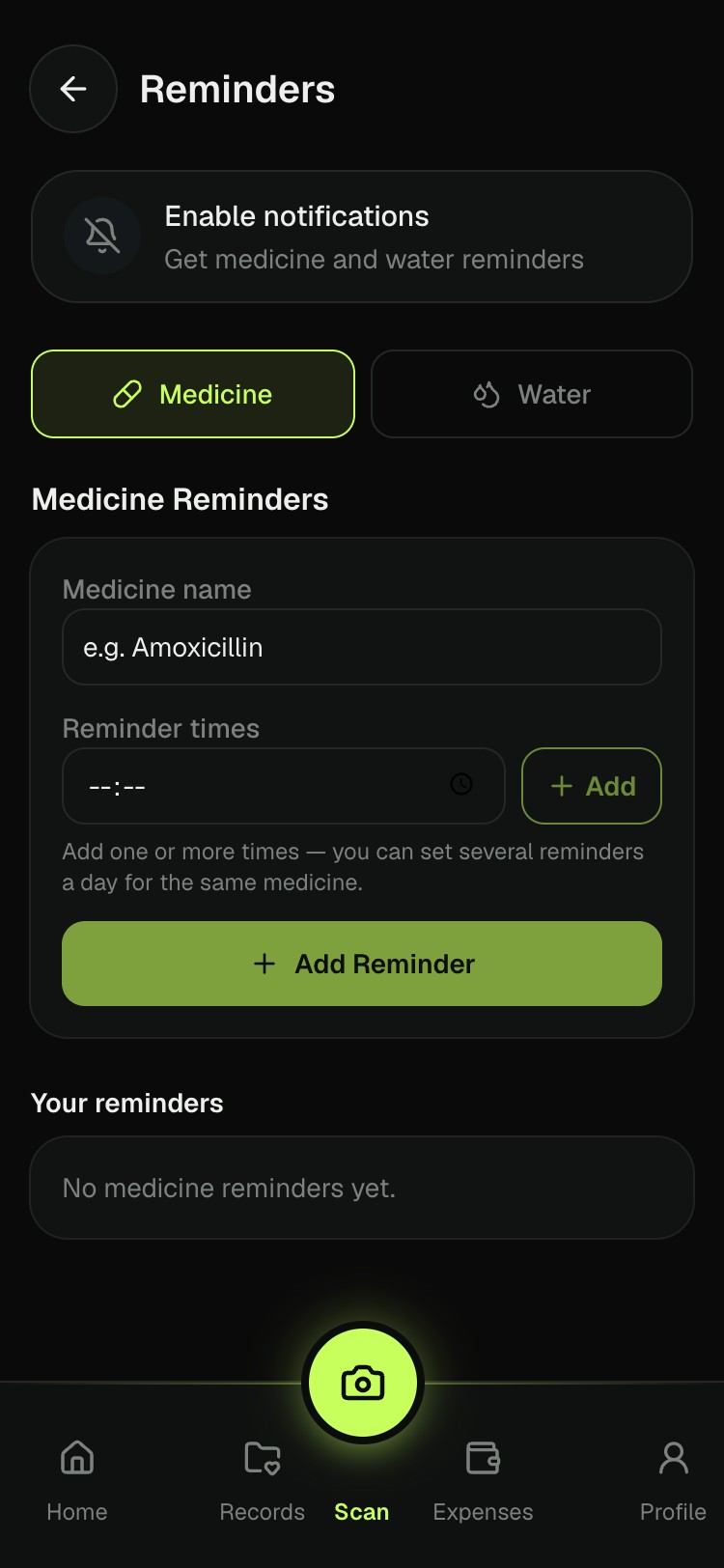
Per-medicine reminders can be set for one or more times a day.
Medical spending was scattered across receipts, with no sense of total cost or patterns over time.
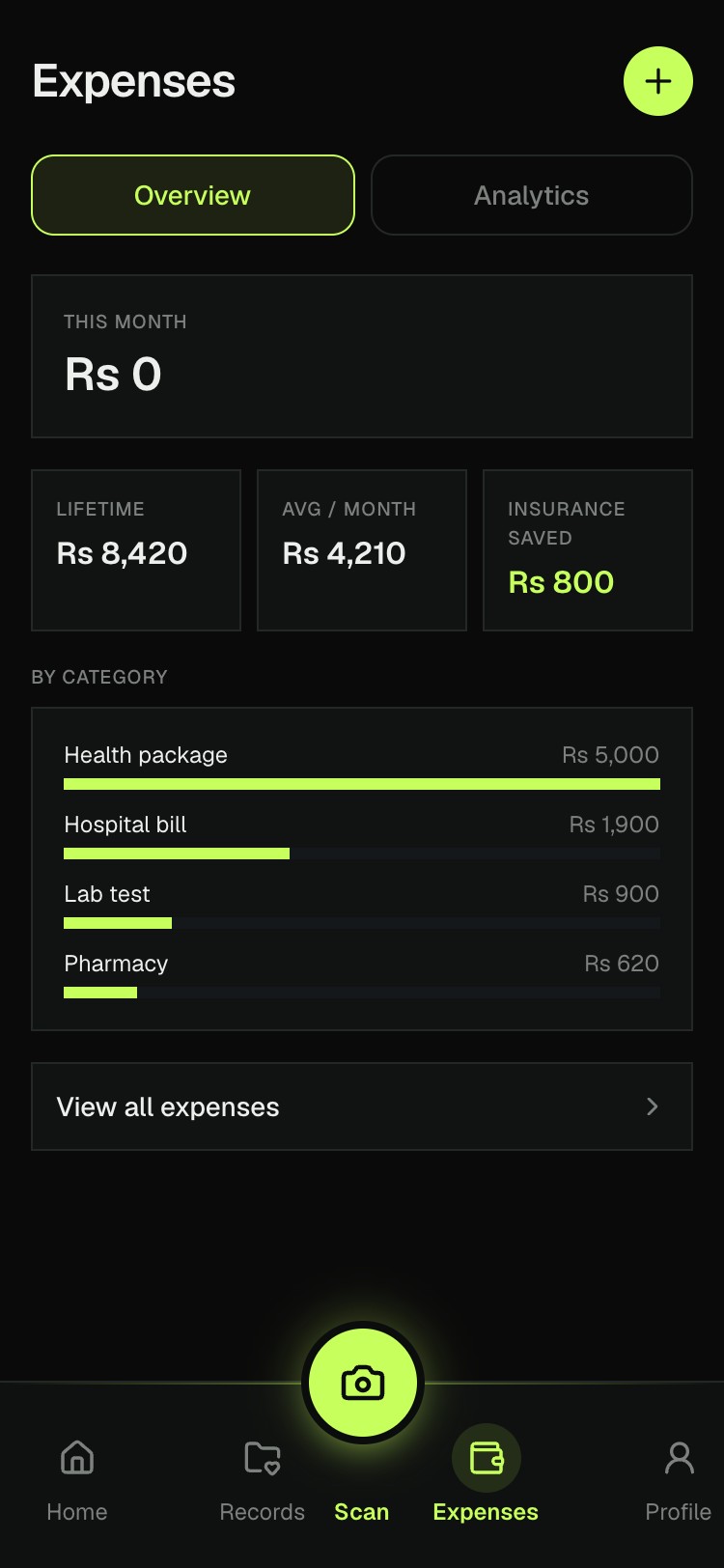
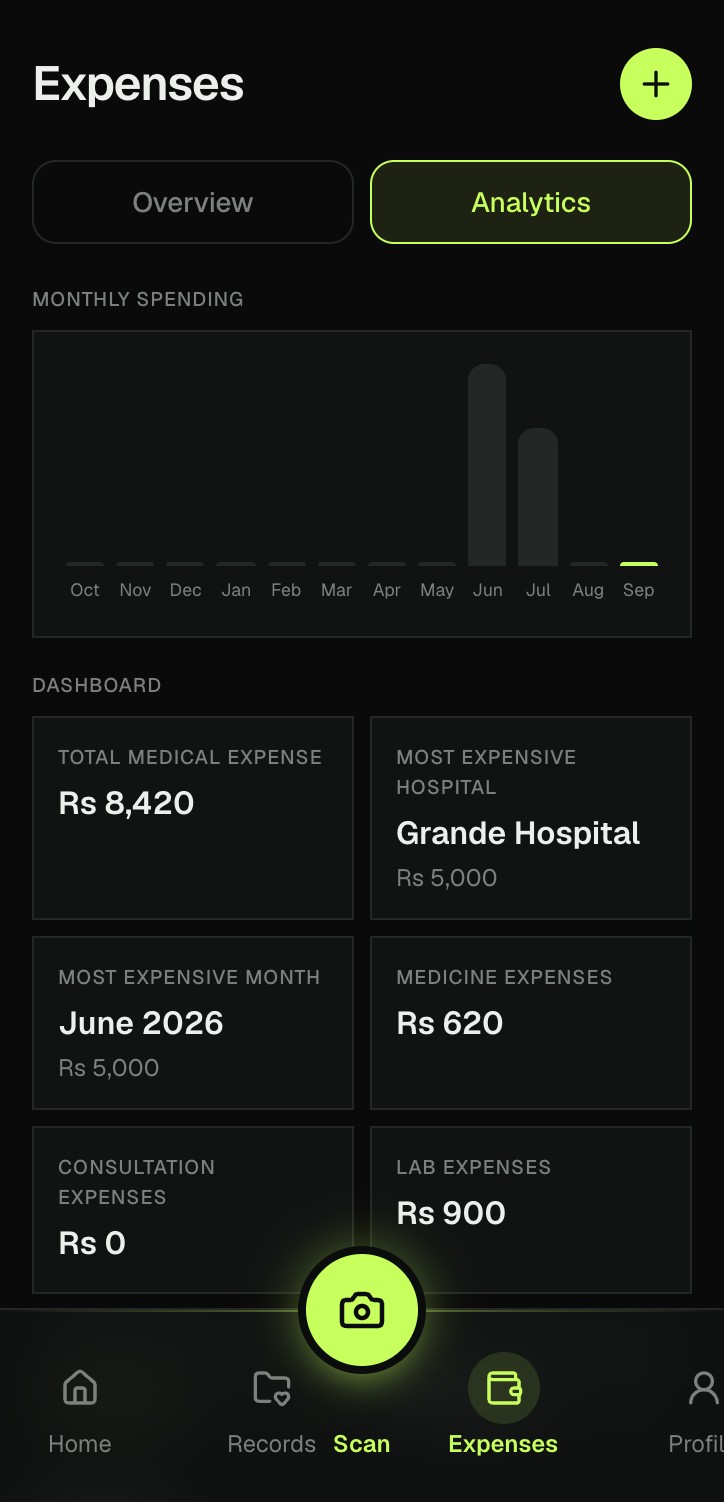
An expenses view tracks lifetime and monthly spend, insurance savings, and a breakdown by hospital and category.
In an emergency, critical information like blood type or allergies wasn't quickly accessible to first responders.
An Emergency Card puts blood type, conditions, allergies, and an emergency contact one tap away.
Shipped features
Prescription scanning
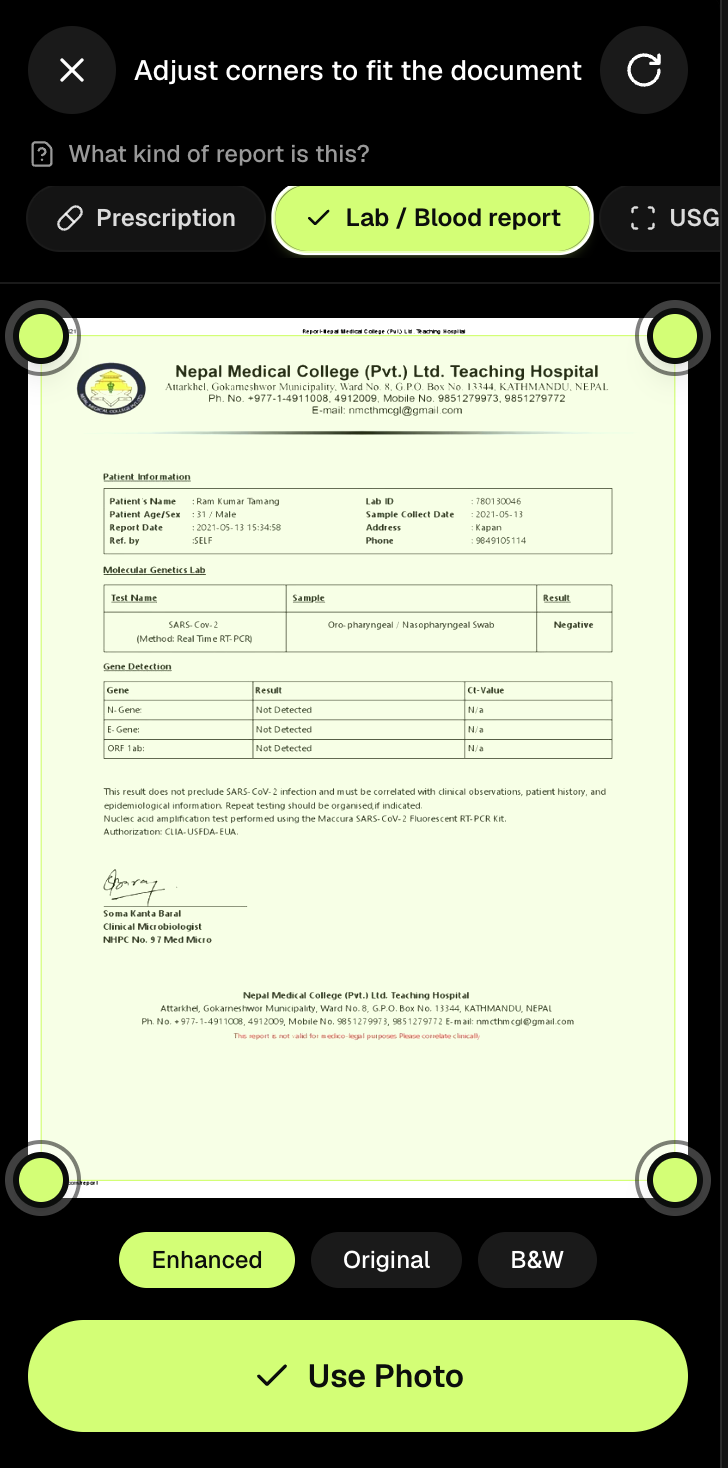
Camera-first capture with a gallery-upload fallback for when camera access isn't available. A corner-detection crop and an Enhanced / Original / B&W filter clean up the shot before it's saved alongside the record it creates, so the original is never lost.
X-ray & lab report scanning
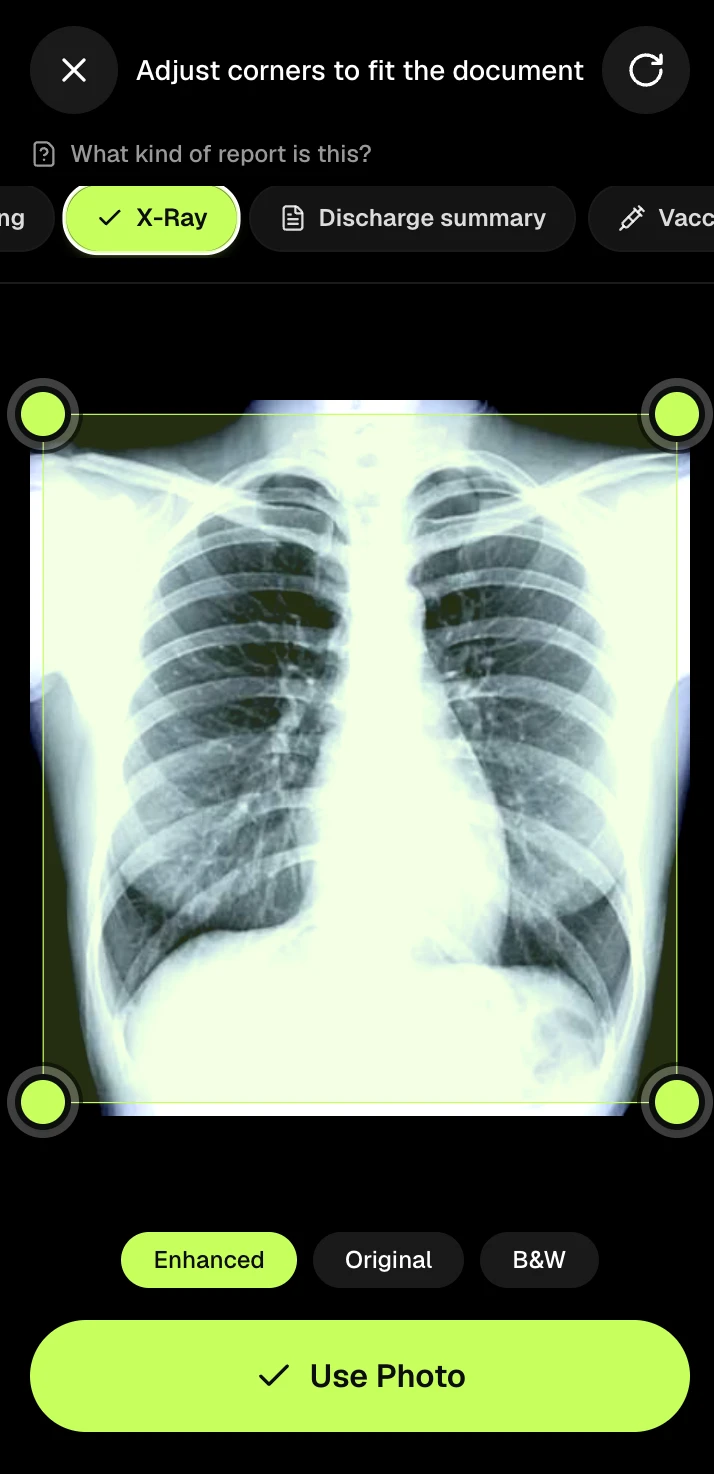
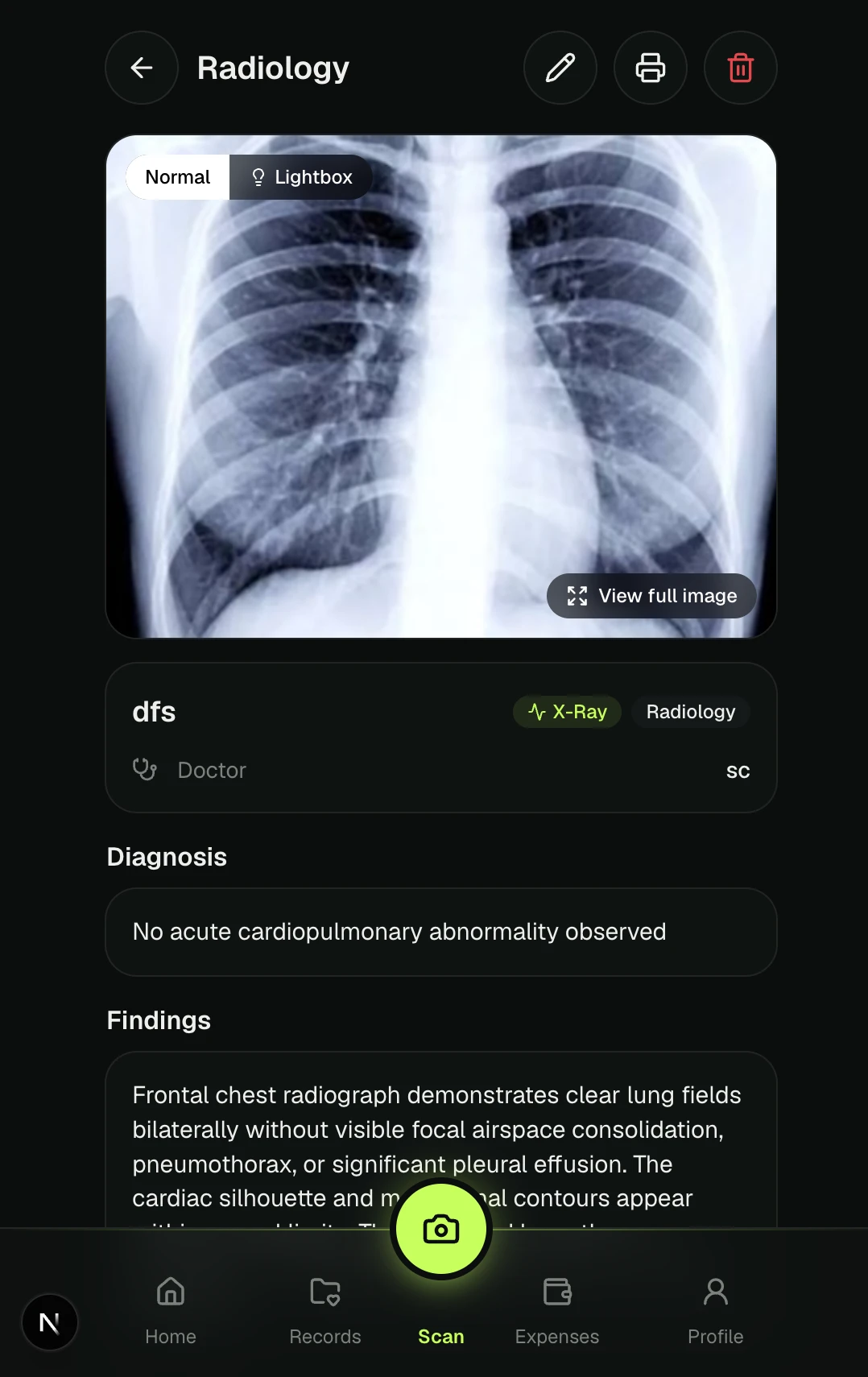
The same scanner handles more than prescriptions: X-rays, lab and blood reports, discharge summaries, and vaccination cards each get their own report type, a lightbox view for the film, and an AI-written summary of the findings.
Automatic record structuring
The doctor's name, visit date, follow-up date, and diagnosis are pulled from the scanned prescription automatically and turned into a structured, searchable record.
Plain-language AI analysis
Every record gets a written explanation of what the medications are for and what the note actually means, in language a patient can follow, not a doctor. Clearly labeled as informational only, with a nudge to confirm anything important with a real doctor.
Records timeline
Every visit, grouped by date on the Bikram Sambat calendar, filterable by type (All / Prescription), with a jump-to-date control for finding an old visit fast.
Medicine & water reminders
Per-medicine reminders with one or more times a day, plus a separate water reminder, so staying on a dosing schedule doesn't depend on memory.
Emergency Card
Blood type, known conditions, allergies, and an emergency contact, surfaced on one screen so it can be pulled up fast in a crisis instead of dug out of menus.
Expense & insurance tracking
Lifetime and monthly medical spend, insurance savings, and a breakdown by hospital and category, plus a monthly spending chart, so cost patterns are visible instead of scattered across old receipts.
Notifications
Medicine and water reminders and follow-up alerts land in one place, so a scheduled follow-up with a doctor doesn't get missed.
Accessibility settings
Adjustable text size and a high-contrast mode, since a lot of the people who need this app most (older patients, people managing chronic conditions) are the least served by small, low-contrast type.
What's next
Prescription sharing with family
Share access to a specific prescription or record with a family member, instead of forwarding a photo over chat.
Family record inheritance
Pass on or share a running medical history within a family, so records don't stay siloed to a single account.
Pregnancy tracker (women only)
A pregnancy-tracking feature rolling out only for female users, with the option to share progress and updates with a husband or other family members.